

If you run a website, you've probably worried about whether your pages load quickly enough. You're not alone. Google's own research suggests as page load time goes from 1s to 3s. The probability of a user bouncing increases by 32%.
That's a significant gap. Truly, that's a brutal number mostly since it head-on translates to lost visitors, lower conversions, and fewer the majority seeing your content.
Here's the kicker: those slow moments don't just (and the data generally agrees) annoy anyone on the platform. They send a clear signal to search engines that your site mightn't deserve that top ranking.
TL; DR
- Website loading speed directly impacts SEO because slow pages increase bounce rates—Google’s data shows a 32% higher bounce probability when load time goes from 1 to 3 seconds—and signals poor user experience.
- Improving speed doesn’t require a complete overhaul; compressing images, minifying code, reducing HTTP requests, and using a CDN can cut load times significantly and lift Core Web Vitals scores.
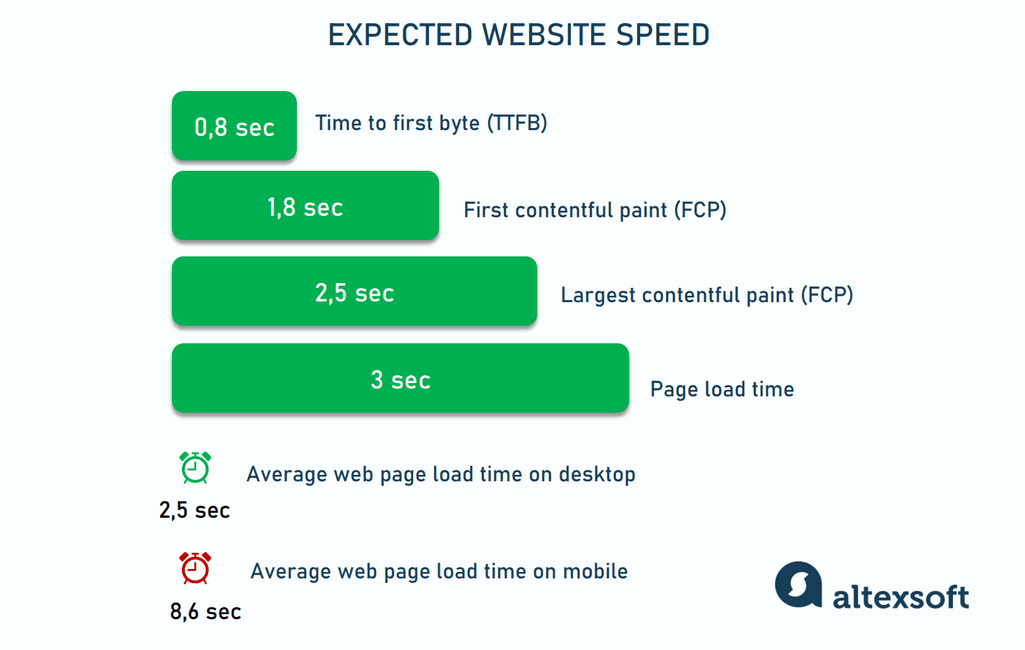
- Chasing a perfect speed tool score is a mistake; the real goal is a perceivably fast page that loads under about 3 seconds on mobile, with Largest Contentful Paint (LCP) under 2.5s and Cumulative Layout Shift (CLS) under 0.1.
Key Point
- Speed is a ranking factor, but not the only one—Lumar’s analysis makes it clear that speed improvements alone won’t rocket your site to page one if the content and links are weak.
- About 73% of mobile users say they’ve abandoned a site that didn’t load within 5 seconds, and that loss hits both SEO and revenue, because every bounce is a missed conversion opportunity.
- If you only do one thing, start with image compression and lazy loading—most bloated pages are drowning in oversized media files that can be shaved down by 60–80% without visible quality loss.
What Website Loading Speed Actually Means
By most accounts. Loading speed isn’t just the time it takes for a page to “finish” in your browser’s spinner. What this means is akamai defines it as the interval between a user’s request and.
When the site totally displays its content, that's, when the main visual elements are ready to interact with. 5 seconds or less. Then there’s Cumulative Layout Shift (CLS). Which quantifies visual stability—how much stuff jumps around while the page loads. 1 and you’re golden.
Putting that aside for now, if you think about it, but here’s where a lot of site owners get tripped up. So a page that reports “completely loaded” in 6 seconds on a tool like Lighthouse might actually feel rapid to a real user. 8 seconds. The metric that matters is perceived performance—did the page become usable quickly? Which is why chasing UI scores without measuring real-user field data from CrUX (which completely makes sense logically) can be a trap.
The Core Web Vitals at a Glance
| Metric | Good Threshold | Poor Threshold |
|---|---|---|
| Largest Contentful Paint (LCP) | ≤2.5 seconds | >4.0 seconds |
| Interaction to Next Paint (INP) | ≤200 milliseconds | >500 milliseconds |
| Cumulative Layout Shift (CLS) | ≤0.1 | >0.25 |
These thresholds are Google’s own, and they matter. Because they directly tie into ranking signals for mobile search. Sites that pass all three thresholds can gain a modest rankings boost, while those failing repeatedly may see search visibility erode.
Why Website Loading Speed Matters for SEO
When your pages crawl, SEO takes a beating. Not because Google has a magical speed penalty, but. Because user behavior changes so much that rankings follow suit. Backed by research.
The logic is clear: slow loading → frustrated users → high bounce rates → lower engagement → weaker signals that your content satisfies intent. And Google notices that decline.
SeoClarity notes that sites loading in under three seconds outperform slower competitors across really every engagement metric, which means’s not just organic traffic; it’s time on site, page views per (at least based on current observations) session, and conversions. A snappy site creates a virtuous cycle: visitors stick around. Consume more content, and send positive behavioral signals back to the search algorithm. This detail matters more than it might seem right now.
How Does Speed Actually Affect Rankings?
In a direct sense. Page speed is a confirmed ranking factor, though a lightweight one.
Google’s own documentation places it alongside other “page deal with” signals, meaning it tends to act as a tiebreaker, so if two pages have similar content quality and authority, the (which aligns with standard practices) faster one wins. But the bigger impact is indirect.
Sluggish pages get crawled less efficiently. Because limited crawl budget gets wasted on slow responses. That means new content or updates might not land indexed for days, which is a hidden SEO nightmare.
Yet, context matters heavily.
“A fast site speed provides a better how it feels to use, improves search platform rankings, and boosts engagement.”
BrowserStack’s observation highlights the compound effect: speed touches everything from crawl efficiency to user trust. So improving it ripples across all your SEO efforts.
Is Mobile Performance More Important Than Desktop?
Since Google switched to mobile-first indexing. The mobile version of your site is what determines your rankings. So yes, mobile speed is now the primary lens. Nine times out of ten, devices less powerful—meaning optimizations that barely register on a gigabit desktop connection can be life-changing on 4G.
Prioritize above-the-fold content, compress everything; and be ruthless with render-blocking scripts. Akamai’s research stresss that mobile most of us’ patience is razor-thin; a 3-second delay can wipe out a huge chunk of potential traffic.
Sure enough, here’s a real-world pattern we see over. And over: a site scores 90+ on desktop Lighthouse but 35 on mobile. Not exactly what you'd expect.
That discrepancy is a massive red flag due to the fact that the mobile score is what Google actually uses. And honestly, ignore desktop scores if your audience is primarily on phones.
What’s the Catch with Chasing a Perfect Speed Score?
Lumar’s team has been blunt about this. Speed improvements in isolation are unlikely to have a substantial impact on rankings. You can obsess over every millisecond and still not actually.
If your content is thin or your backlink profile is weak. The real danger is over-improving—compressing images into oblivion, removing interactive elements that boost conversions, or deferring scripts that break user functionality. 2 seconds but looks broken. Or untrustworthy will scare visitors away faster than a clean but slightly slower page.
What’s the practical bottom line? Treat speed as a prerequisite, not a silver bullet. Aim for a 3-second or faster load time on mobile (as a baseline quite a few SEOs reference). 1. Beyond that, pour your energy into exceptional content and a smooth conversion path.
How to Optimize Website Loading Speed for SEO
Here's the long and short of it: blocksep matters. If you’re tired of seeing speed warnings in Google Search Console, here’s the playbook; which is why no fluff, just the steps that deliver (which completely makes sense logically) the biggest gains first.
What’s the Single Biggest Fix for Most Sites?
Compress your images. What this means is i know, it sounds too direct, but images account for 50–70% of a run-of-the-mill webpage’s total weight. Tools like TinyPNG, ShortPixel.
Or even the “Save for Web” function in Photoshop can slash file sizes by 60–about 80% with zero visible quality loss. Let that sink in for a second. Arguably and combine that with lazy loading so off-screen images don’t bsecureitial rendering. This one move regularly shaves seconds off load time.
Reducing HTTP Requests and Render-Blocking Code
Every CSS file, JavaScript library. And custom font adds a separate round-trip to the server. Cut unnecessary plugins, combine files where possible, and minify the rest. For render-blocking JavaScript, use the async or defer attributes so the browser can build the page while scripts download.
That way, most of us see content almost immediately even. If the full interactivity lands a moment later.
The Server-Side Speed Killers
Even perfectly improved front-end code can’t rescue a sluggish server. Plus, upgrade to a host with solid response times (think managed WordPress hosting like Kinsta or WP Engine) or at least a VPS with enough RAM. Add a CDN like Cloudflare or BunnyCDN. So static assets are served from nodes close to your visitors.
Caching is non-negotiable: object caching with Redis, page caching via Varnish or a plugin like WP Rocket. The follow-up question is obvious.
And browser caching can turn a, I mean, 3-second active page into a sub-second delivery.
Lazy Loading, Async Assets, and Code Splitting
Load only what’s necessary for the first paint. The thing is, those customer testimonials at the bottom of the page don’t need to fetch images until the user scrolls near them.
Why does that matter? The key here is that modern HTML supports native lazy loading with loading="lazy" on <img>. And <iframe> tags, which works across all major browsers.
More often than not, or active imports in React) ensures visitors only download the JavaScript needed for the current page, not the entire site’s bundle.
- Compress all images — Convert to WebP/AVIF and shrink file sizes; this alone can drop total page weight by over 50%.
- Minify CSS, JS, and HTML — Strip whitespace, comments, and unnecessary code; many caching plugins do this automatically.
- Implement a CDN — Cloudflare or BunnyCDN distribute assets globally, cutting load time by 200–500ms on average.
- Defer non-critical JavaScript — Mark scripts as async or defer so they don’t block rendering, and lazy-load third-party embeds.
- Enable cache layers — Add page caching, object caching (Redis), and browser caching so repeat visitors load instantly.
People Also Ask
Does a slow website hurt all pages equally?
No, pages with heavy media or lots of JavaScript suffer most, while text-heavy blog posts may load reasonably (at least in many practical scenarios) fast even on average hosting. However, search engines evaluate site-wide performance. So a few slow pages can negatively affect the entire domain’s crawl frequency.
How much does a CDN really help?
A solid CDN can reduce load time by 200 to 500 milliseconds, which doesn’t sound like much. 1s fail. It also offloads bandwidth, lowering server load during traffic spikes.
Is shared hosting always bad for speed?
Not consistently, but most cheap shared plans drastically limit CPU. And memory, which kills server response time. If your site gets more than a few thousand visitors a month. Upgrading to a managed host or VPS is one of the best SEO moves you can make.
Can too much optimization hurt my site?
For the most part, over-improvement, aggressive deferral that breaks functionality, excessive compression that makes images blurry. Or removing critical third-party scripts like analytics, can destroy user trust and conversions. This goal is balance.
FAQs
Why does website loading speed matter for SEO?
Because slow pages increase bounce rates, reduce dwell time. And limit crawl budget—all signals that search engines interpret as lower content quality, which can drag down rankings over time.
What’s a good target load time?
Keep in mind what we talked about earlier, industry consensus settles around 3 seconds or faster for mobile. 1 to meet Google’s Core Web Vitals thresholds.
Are page speed scores from tools accurate?
They’re useful but often reflect synthetic lab conditions. Real the UX side (field data) from Chrome How it feels to use Report. Or PageSpeed Insights’s “real most of us” tab gives a more truthful picture.
Conclusion
You don’t need to be a performance engineer to make a real difference. More a lot than not, that trinity alone puts you ahead, thinking about it more, of most (a detail a lot overlooked) sites bleeding traffic to sluggishness.
Remember: speed is a foundation, not a destination. 5s, your CLS negligible, and your content exceptional. You’ll have a site that both — correction, humans and search engines love spending time on. Now go run a speed test on your most important landing page, select the top two fixes, and deploy them today.
🔍 Research Sources
Verified high-authority references used for this article
- akamai.com
- seoclarity.net
- cloudflare.com
- lumar.io
- semrush.com
- browserstack.com
- edgeoftheweb.co.uk
- cognitiveseo.com