

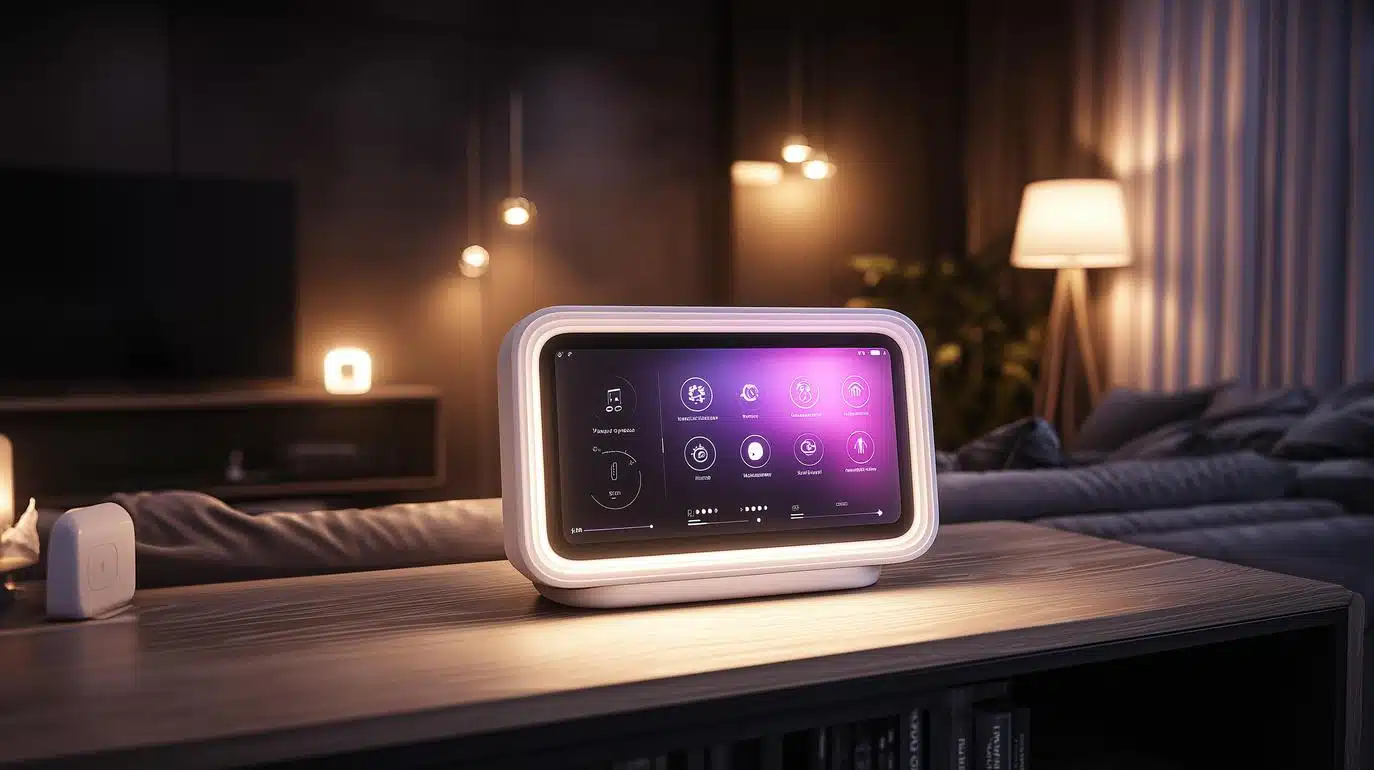
The short answer is yes.
Key Point
- Upgrading your heating controls before anything else is the single most powerful move you can make.
- The best systems don't lock you into one brand; they pull together sensors and appliances from different makers so you stay in control.
- Real savings show up when your home automatically shifts energy use to cheaper hours, not just when you dim a few lights.
TL; DR
- Smart thermostats can trim heating bills by about 10%, while households fully equipped with smart features often reduce overall energy use by roughly 30%.
- Germany, France, and the Netherlands put roughly EUR 2.1 billion into 2025 rebates for connected heat pumps, thermostats, and water heaters, meaning now is the cheapest time to act.
- Starting with a central platform and checking device compatibility first is the make-or-break step; without it, the promised savings never appear.
What Is an Energy-Efficient Smart Home?
Realistically, an energy-efficient smart home is a living space where connected devices work together to cut waste automatically. Not a house stuffed with gadgets that just respond to voice commands. In Europe right now, this concept is shifting from novelty to necessity. Because the whole point is to shrink your grid consumption without, or rather, making you (which aligns with standard practices) think about it every hour.
The core idea is hassle-free: sensors, appliances, and controls talk to each other so that heating cools down when windows open, lights dim when sunshine pours in, and heavy loads like EV charging start only when electricity is cheapest.
People sometimes picture a futuristic villa full of screens.
How is this different from just having a programmable thermostat?
A programmable thermostat follows a fixed schedule you set once. A smart energy system reads live conditions, like outdoor temperature. Time-of-use tariffs, and whether you're actually home, then adjusts on the fly. This responsiveness is what drives those 10% heating bill cuts that industry data keeps citing.
Why 2026 Is the Year to Act in Europe
Naturally, the policy push across Europe has turned from encouragement into something (which aligns with standard practices) close to a mandate. And that's great news for your wallet if you move now.
The EU's building efficiency directives are forcing new builds. And major retrofits to include automated heating, lighting. Ventilation controls, this is accurate.
So even if you don't care about regulations, the, actually, that's not quite right, rebates tied to them are flooding the market right now.
1 billion in 2025 for rebates on connected heat pumps. Thermostats, and water heaters. Those programs haven't dried up yet; in 2026 you can still claim thousands of euros back just for swapping an established boiler control for a smart one.
Why should I care about EU building rules if I'm not building a new house?
In practical terms. Because retrofits are the bulk of the action. Now, even if you live in a 1970s flat, upgrading your heating controls to a model that communicates with a variable tariff can indeed rebates and instantly lower your monthly bill.
The EU rules are pushing energy suppliers to offer live pricing APIs, (at least in loads of practical scenarios) especially in the Nordics. And the Netherlands, so your appliances can automatically run during (at least in loads of practical scenarios) cheap, clean power windows. That's a direct link between policy and the euros you keep.
How to Build Your Setup: Devices, Platforms, and Practical Steps
Forget buying a bunch of flashy sensors. And hoping they magically sync. The smart money consistently picks the central platform For one, then selects devices that actually talk to it without a fight. Nine times out of ten, and a garage door opener that can't chat with the thermostat, all while the promised savings (and rightly so) vanish into frustration.
Here's a blazing look at the four device types that give you the most efficiency traction right away: Store this one. It ties everything together later.
| Device Type | Best For | Typical Energy Impact | Setup Complexity |
|---|---|---|---|
| Smart Thermostat / Heating Control | Slashing gas or heat pump bills | Cuts heating costs by around 10% | Medium, may need wiring |
| Smart LED Bulbs | Immediate lighting savings | Uses at least 75% less energy than incandescent, lasts 25x longer | Extremely easy |
| Smart Plugs with Energy Monitoring | Pinpointing vampire loads | Reveals which appliances drain power, then cuts it | Easy |
| Central Smart Hub / Multi-Brand Controller | Orchestrating everything | Magnifies other devices' savings by automating load shifting | Medium to high |
“The first step is to choose a central platform … This will form the backbone of your setup.” — EcoFlow
“The homes of 2026 are expected to be more integrated, more energy-efficient, more secure, more personalized, more design-conscious, and easier to control and expand over time.” — Nice
“The answer lies in their ability to automate and optimise various aspects of home energy management.” — Renewable Energy Hub
How do you actually start without burning money on stuff that won't work together?
- Pick a central platform — Check if it supports Matter, Thread, or major brands you might add later.
- Install a smart thermostat first — Heating is your biggest energy cost; get it automated before anything else.
- Swap a few high-use bulbs to smart LEDs — Start with the rooms you leave lit the most; the 75% less energy per bulb adds up fast.
- Add a smart plug with energy monitoring — Plug in your fridge or TV to see exactly where power vanishes overnight.
- Connect to your electricity tariff API — If your provider offers hourly pricing, let your hub shift EV charging and water heating to the cheapest slots.
Does a smart plug really save much energy?
In practice, the dynamic changes slightly. By itself, it just measures. But once you see that your old freezer pulls 80 watts constantly, you'll either replace it or put it on a schedule. The real win is identifying the hidden loads, then automating them away, and that awareness alone — to be more precise, all the time shaves 5-8% off a monthly (which aligns with standard practices) bill without any complex install.
Common Pitfalls That Wipe Out Your Savings
Maybe the hardest truth about smart home efficiency is that the gadget itself doesn't save a single cent. Your behavior and the setup quality do. And that's where plenty of the majority slide off track. They buy a thermostat, slap it on the wall.
And wonder why the gas bill didn't drop. Then they blame the technology when it was the installation, or the missing automation rules, or the fact that they still crank the manual radiator valve in the hallway while the smart system tries to save energy elsewhere. At least, that outlines the core theory.
Naturally, data privacy is another quiet killer. When every sensor and camera wants a cloud account. Some everyone rightfully pause and leave half their devices disconnected.Choose platforms that support local processing.
Is it really cheaper to go smart if I need subscriptions and professional installation?
In practice, the dynamic changes slightly. Honestly, it can be tight. If you pay a monthly fee for cloud storage, an annual subscription for advanced automations.
And an electrician to wire the thermostat, those costs might eat your first year's energy savings completely. That's why the most efficient homes pick devices with, or, better put, free local control and skip the recurring charges wherever possible.
The math works much better. When you avoid the subscription trap. This detail matters more than it might seem right now.
“[T]he single biggest mistake is buying a pile of sensors and then trying to make them work together after the fact.” — A forum veteran's blunt summary from years of troubleshooting threads
People Also Ask and FAQs
How much can I realistically save with a smart thermostat?
Most households see about a approximately 10% drop in their heating bill after a proper smart thermostat install. That jumped out at me too.
That number comes from real-world field data. Where the device adjusts based on occupancy and weather, not just (and rightly so) a fixed schedule. If your annual heating cost is EUR 1,200, that's a EUR 120 saving per year.
Are smart LED bulbs worth it if I already use regular LEDs?
Absolutely, because smart bulbs add automation that regular LEDs can't. Generally speaking. The data speaks for itself. But the motion sensors and geofencing routines make sure they never burn through hours of unnecessary light.
You could say when everyone leaves can pay for its extra cost within months.
Can I still get a rebate for smart devices in 2026?
The underlying point remains simple. 1 billion earmarked in 2025 still funds rebates for connected heat pumps, thermostats, and water heaters through much of 2026. Let that sink in for a second. Check your local energy agency website for the current rates. Because they change quarterly.
What do I do if my devices don't talk to each other?
Naturally, To start, verify they both support the same communication standard, like Matter or Zigbee. Which brings up an interesting point. And if they don't, a central hub that bridges multiple protocols is the next best step. Loads of most of us find that a dedicated multi-brand controller solves the fragmentation that kills automated energy savings.
Does a smart home always need a professional installer?
Not always. For the most part, the main reason installers get called is when everyone try to blend too tons of incompatible devices at once; starting small reduces that need.
Is the data from my smart home really private?
It depends completely on the platform you pick. Some brands store every reading in the cloud and use it for product analytics. Most likely if privacy worries you, choose a system with local processing and no mandatory account.
Conclusion: Your Next Steps
You don't need to turn your home into a sci-fi command center to cut (at least in many practical scenarios) energy costs in 2026. And the trend keeps going. The most effective path is surprisingly boring: start with a smart thermostat, confirm your devices; to be more precise, can talk to each other, then let cheap tariff windows handle your biggest loads automatically.
Skip the subscription fees and pick a platform that respects your data. Of course, actual metrics may shift.
Once that foundation is solid, every extra sensor. Or bulb becomes a multiplier, not another headache. The rebates are out there right now, and they won't last forever. Plus, pick one device this week, install it, and watch your bill in two months.
That single step is more powerful than a cart full of unconnected gadgets any day.
🔍 Research Sources
Verified high-authority references used for this article
- mordorintelligence.com
- marketdataforecast.com
- renewableenergyhub.co.uk
- niceforyou.com
- eufy.com
- energy.ecoflow.com
- forbes.com
- digital-strategy.ec.europa.eu